
What Is Medigap? A Plain-English Guide to Medicare Supplements

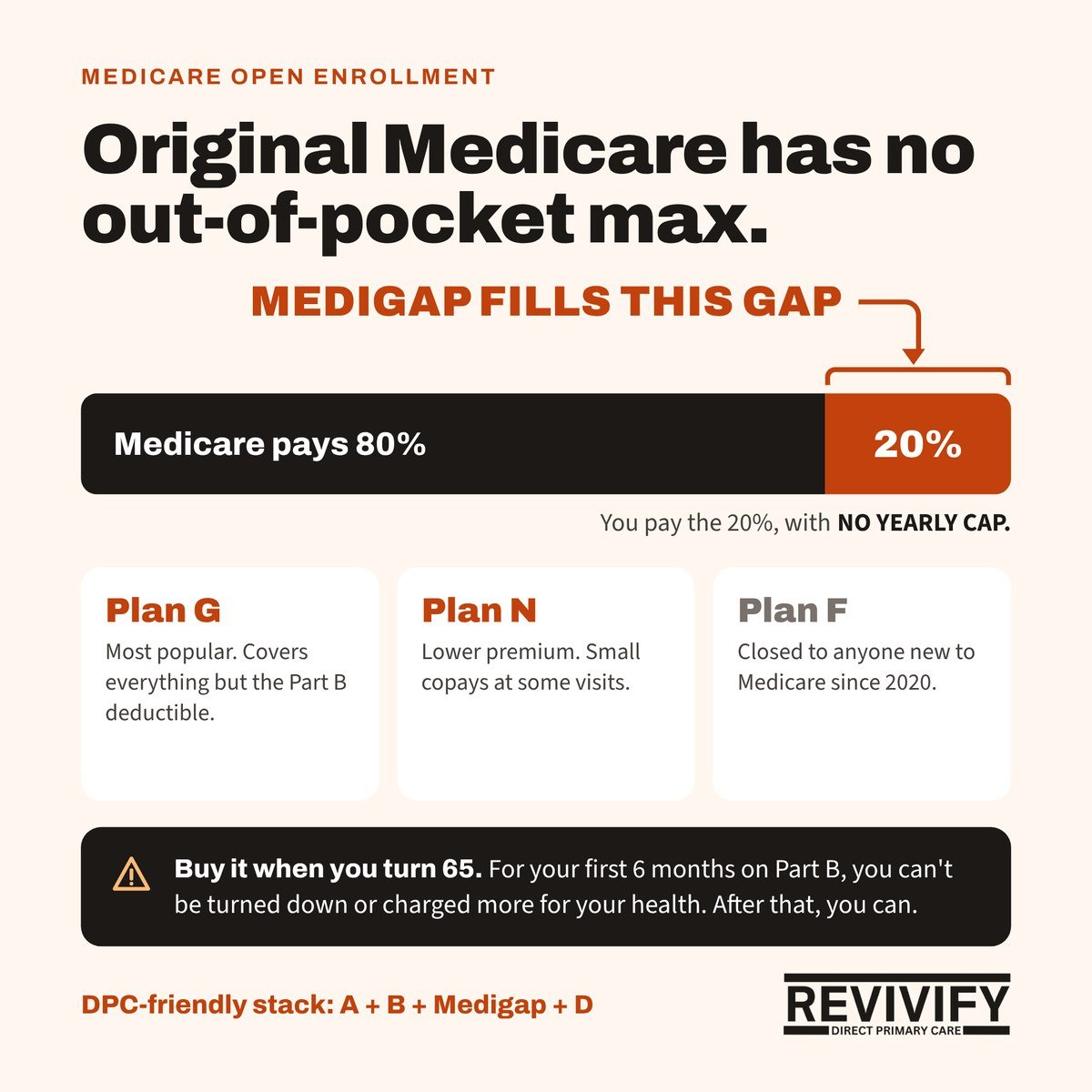
Here’s a fact that surprises almost everyone I explain it to: Original Medicare has no out-of-pocket maximum. None. Your car insurance has a limit. Your old employer plan had one. But if you’re on Original Medicare alone and you have a bad year, there’s no ceiling on what you can owe.
That’s the gap Medigap was built to fill. If you’ve heard the word tossed around in Medicare ads and never quite known what it meant, this post is for you. And if you’re thinking about pairing your Medicare with a direct primary care membership, it may be the most important piece of the puzzle.
The Problem: Original Medicare Pays Most of the Bill, Not All of It
Original Medicare is good coverage. Part A covers hospital stays. Part B covers doctor visits, outpatient procedures, imaging, lab work and medical equipment. (If you want a refresher on the parts, start here.) You can see any doctor or hospital in the country that accepts Medicare, with no networks and no referrals.
But Original Medicare was designed to share costs with you, and it does that in a few ways:
- The Part A deductible. You pay a sizable deductible each time you’re admitted to the hospital for a new benefit period, and daily coinsurance if the stay runs long.
- The Part B deductible. A smaller amount you pay each year before Part B starts paying.
- The 20%. After the deductible, Part B pays 80% of approved costs for most outpatient care. You pay the other 20%. Forever. With no cap.
For a routine year, that 20% is manageable. For a year with a knee replacement, a cancer diagnosis, or a string of specialist visits and scans, 20% of a very large number is still a very large number. That’s the scenario people don’t picture when they sign up.
The Insight: Medigap Is a Gap Filler, Not a Replacement
A Medigap policy, also called a Medicare Supplement, is private insurance that sits on top of Original Medicare. Medicare pays its share first. Your Medigap plan then pays some or all of what’s left: the deductibles, the coinsurance, that open-ended 20%.
Here’s the part that confuses people. Medigap is not Medicare Advantage. Medicare Advantage replaces Original Medicare with a private plan that has its own network and rules. Medigap keeps Original Medicare in charge and just fills in the holes. You can’t use both at once. In fact, it’s against the law for an insurer to sell you a Medigap policy while you’re enrolled in a Medicare Advantage plan.
How Medigap Actually Works Day to Day
In practice, Medigap is pleasantly boring. You see a doctor who accepts Medicare. The office bills Medicare. Medicare pays its part and automatically passes the rest to your Medigap insurer, which pays its part. Depending on your plan, you may owe nothing at all, or a small copay.
A few things worth knowing:
- No network. If a doctor or hospital accepts Medicare, your Medigap plan works there. That includes famous specialty centers across the country.
- No referrals. Want to see a dermatologist? Call and book.
- A separate premium. You pay a monthly premium to the Medigap insurer, on top of your Part B premium.
- One person per policy. Spouses each need their own plan.
The Plans, in Plain English
Medigap plans are labeled with letters, and here’s the good news: in California and most states, the benefits for each letter are standardized by federal law. A Plan G from one company covers exactly the same things as a Plan G from any other company. What differs is the price, how the insurer raises rates over time, and customer service. That makes shopping much simpler than it looks.
You’ll mostly hear about three of them:
- Plan G. The most popular choice for people new to Medicare. It covers everything Original Medicare leaves behind except the yearly Part B deductible. Once you’ve paid that deductible, you generally owe nothing more for Medicare-covered care that year. There’s also a high-deductible version with a lower premium if you’re comfortable carrying more risk.
- Plan N. A lower premium in exchange for a little cost sharing. You pay the Part B deductible, up to $20 for some office visits, and up to $50 for an emergency room visit that doesn’t lead to an admission. It also doesn’t cover “excess charges,” the extra amount (up to 15%) that some doctors who don’t accept Medicare’s rate can bill.
- Plan F. The old gold standard, covering even the Part B deductible. It’s closed to anyone who became eligible for Medicare on or after January 1, 2020. If you already have Plan F, you can keep it.
What Medigap Doesn’t Cover
Medigap only pays toward services Medicare covers. That leaves out a few things people often assume are included:
- Prescription drugs. You’ll want a separate Part D drug plan.
- Routine dental, vision and hearing aids. These need separate coverage or out-of-pocket planning.
- Long-term custodial care, like help with bathing and dressing in a nursing home.
- A direct primary care membership. More on that below, because it’s actually a good thing.
When to Buy: The Timing Matters More Than the Plan
This is the part I most want readers to remember. Medigap doesn’t have a yearly open enrollment like the rest of Medicare. You get a one-time, six-month window that starts the month you’re 65 or older and enrolled in Part B. During that window, insurers must sell you any Medigap plan they offer at their standard rate, regardless of your health.
After that window closes, insurers can usually ask health questions, charge you more, or turn you down. There are exceptions, including a trial right if you tried Medicare Advantage for the first time and want out within 12 months, protections if your Medicare Advantage plan leaves your area, and California’s birthday rule, which gives current Medigap holders 60 days starting on their birthday each year to switch to a plan with equal or lesser benefits, no health questions asked. (We covered all of these in the dates you can’t afford to miss.)
The practical takeaway: if you’re turning 65, decide about Medigap during your window, even if you feel great. And if you’re in Medicare Advantage and thinking of moving to Original Medicare, find out whether you can get a Medigap policy before you switch.
Medigap vs. Medicare Advantage at a Glance
- Monthly cost: Medigap has a premium. Many Medicare Advantage plans have a low or $0 premium.
- Costs when you get care: With Medigap, they’re small and predictable. With Medicare Advantage, you pay copays as you go, up to the plan’s yearly maximum.
- Choosing doctors: Medigap works with any doctor who accepts Medicare. Medicare Advantage usually means a network.
- Referrals: None with Medigap. Often required with Medicare Advantage HMOs.
- Extras: Medicare Advantage plans often bundle drug coverage, dental or gym perks. With Medigap, you add a Part D plan and handle extras separately.
Neither is right for everyone. One trades a higher premium for freedom and predictability; the other trades flexibility for a lower monthly bill.
Where Direct Primary Care Fits
This is where the pieces click together. Picture four layers: Original Medicare for hospitals, specialists, imaging and surgery; Medigap to cover what Medicare leaves behind; a Part D plan for prescriptions; and direct primary care for the everyday relationship with a doctor who actually knows you.
Medigap won’t pay your DPC membership, and that’s by design. Your membership is a simple flat monthly fee paid directly to the practice, with no claims and no copays. Medicare and Medigap keep doing the heavy lifting for everything outside our office. No network rules get in the way, and no plan asks you to designate a different primary care gatekeeper. It’s the setup we see working most smoothly for our Medicare-age members.
Who This Is For
This post is for anyone turning 65 soon, anyone on Original Medicare without a supplement, and anyone in a Medicare Advantage plan who’s frustrated with networks and referrals and wondering what the alternative looks like. It’s also for adult children helping a parent sort through the stack of mail this fall.
Myth-Busting: “I’m Healthy, So I’ll Get Medigap Later”
This is the most expensive misconception in Medicare. Being healthy is exactly why your six-month window matters: it’s your guaranteed chance to lock in coverage before any health issue can be used against you. Many people who wait find out later, when they actually need the coverage, that it’s much more expensive or simply not available to them.
The Revivify Difference
I’m not an insurance agent, and I won’t tell you which Medigap company or letter to buy. What I can do is sit down with you, look at your health and how you use care, and explain how each option would work alongside your membership. Then you can walk into a conversation with a licensed broker or HICAP, California’s free, unbiased Medicare counseling program (1-800-434-0222), knowing exactly what to ask.
What’s Next
Next up: is your Medicare plan DPC-friendly? I’ll walk through a simple doctor’s scorecard for every common setup. In the meantime, if you’d like to talk through how direct primary care would fit with your Medicare, learn about our membership or call us at 858-429-0099.
This post is for general education and isn’t insurance advice. Revivify doesn’t sell insurance, and direct primary care is not insurance.
← Back to all posts