
Medicare Parts A, B, C and D, Explained Like a Human

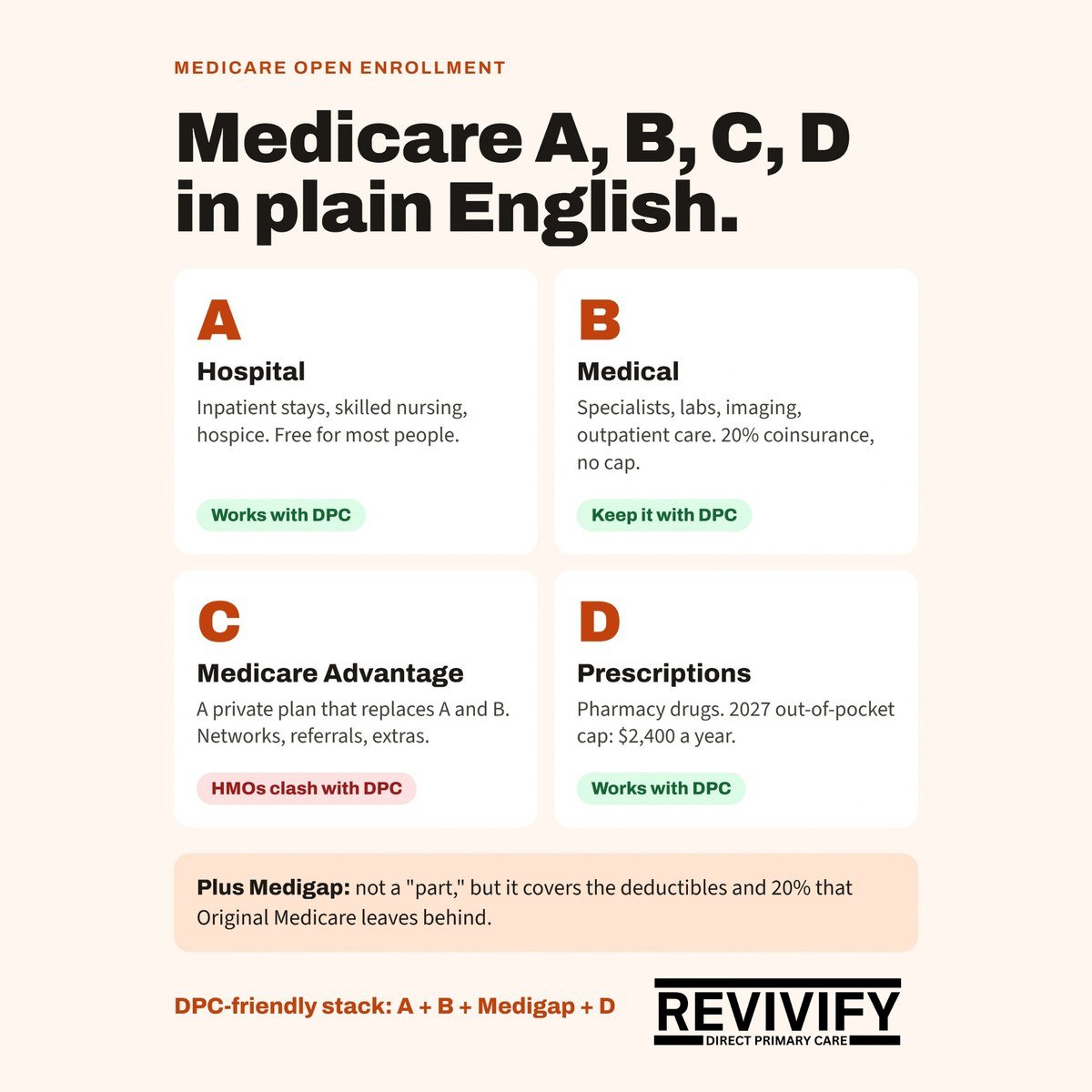
Whoever named the parts of Medicare had a sense of humor. Part A covers hospitals. Part B covers doctors. Part D covers drugs. And Part C? Part C isn’t really a part at all. It’s a whole different way of getting Parts A, B and usually D.
If that’s already confusing, you’re not alone. I’ve had patients with PhDs admit they nod along when someone mentions “Part B” and hope nobody asks a follow-up. Let’s fix that. Here’s what Medicare Parts A, B, C and D actually do, what they cost you, and how each one works if you want a direct primary care doctor.
The Problem: Alphabet Soup Hides Real Tradeoffs
The letters make Medicare sound like a menu where you pick one item. It isn’t. The parts stack together, and the way you stack them changes your costs, your freedom to choose doctors, and how much paperwork stands between you and care.
Most people never learn this explicitly. They pick a setup when they turn 65, often based on a neighbor’s advice or a TV ad, and never revisit it.
The Insight: There Are Really Two Paths
Once you see Medicare as two paths, it gets much simpler.
Path 1, Original Medicare: Part A + Part B from the government, plus a standalone Part D drug plan, and usually a Medigap supplement to cover what A and B leave behind.
Path 2, Medicare Advantage (Part C): a private insurance plan that replaces A and B (and usually includes D) in one package, with its own network and rules.
Now let’s go piece by piece.
Part A: Hospital Insurance
What it covers: Inpatient hospital stays, skilled nursing facility care after a qualifying hospital stay, hospice, and some home health care.
What it costs: Most people pay no premium, because they or a spouse paid Medicare taxes while working. There’s a deductible each time you’re hospitalized (technically each “benefit period”) and daily coinsurance for long stays.
Pros: Free for most people and accepted at nearly every hospital in the country.
Cons: No annual out-of-pocket maximum. A long or repeated hospitalization can get expensive without a supplement.
With direct primary care: No conflict at all. Part A pays the hospital, not your primary care doctor, so joining a DPC practice doesn’t change your hospital coverage one bit. What changes is that you have a doctor who knows you, who can talk to the hospital team and see you quickly after you’re discharged.
Part B: Medical Insurance
What it covers: Doctor visits, lab work, imaging, outpatient procedures and surgery, physical therapy, medical equipment, preventive screenings and some drugs given in a clinic.
What it costs: A monthly premium (higher for higher incomes), an annual deductible, then usually 20% of the bill, with no cap.
Pros: You can see any doctor in the country who accepts Medicare. No networks, no referrals, very little prior authorization.
Cons: That uncapped 20% is the biggest financial risk in Original Medicare. It’s the main reason people buy a Medigap supplement or choose Medicare Advantage.
With direct primary care: This is the part your DPC membership partly takes the place of, for primary care only. Your DPC doctor doesn’t bill Part B. But you absolutely keep it, because Part B pays for your specialists, imaging, outpatient surgery and therapy. One important warning: never drop Part B to save money because you have DPC. Re-enrolling later can mean a lifelong penalty and months without coverage.
Part C: Medicare Advantage
What it is: Not extra coverage. A private plan from an insurer like UnitedHealthcare, Humana or Kaiser that replaces Parts A and B, usually bundles in Part D, and adds its own rules.
What it costs: Often a $0 or low premium (you still pay your Part B premium), copays for services, and an annual out-of-pocket maximum.
Pros: Low premiums, a yearly cost cap, and extras like dental, vision, hearing and gym memberships. One card for everything.
Cons: Networks, referrals (especially in HMOs), prior authorization, and plans that change every year. And as we covered in the dates you can’t afford to miss, leaving later doesn’t guarantee you a Medigap policy.
With direct primary care: This is where friction happens. HMOs want an in-network primary care doctor as your gatekeeper, and a DPC doctor can’t be that, so you’d effectively need two primary care doctors. PPOs are more workable, but the plan won’t pay anything toward DPC care. We’ll dig into this later in the series.
Part D: Prescription Drug Coverage
What it covers: Outpatient prescriptions from a pharmacy. You get it as a standalone plan (with Original Medicare) or built into a Medicare Advantage plan.
What it costs: A monthly premium plus copays that depend on the plan’s drug list. For 2027, the standard deductible rises to $700 and the annual out-of-pocket cap on covered drugs rises to $2,400. Insulin stays capped at $35 a month.
Pros: That annual cap is real protection if you take expensive brand-name medications.
Cons: Every plan has its own drug list and pharmacy network, both change yearly, and standalone plan premiums are expected to rise in 2027.
With direct primary care: Smooth. Prescriptions your DPC doctor writes are covered by Part D like any other doctor’s. Many DPC practices, including ours, also dispense common generics in-office at wholesale cost, which is often cheaper than a Part D copay. One nuance: purchases outside your plan generally don’t count toward your Part D deductible or cap, so for expensive brand-name drugs it’s usually smarter to use your plan. Either way, keep Part D. Skipping it when you’re first eligible brings a lifelong late-enrollment penalty.
Bonus: Medigap Isn’t a “Part,” but It Completes the Picture
Medigap (Medicare Supplement) policies pay the costs Original Medicare leaves behind: deductibles, that 20% coinsurance, hospital coinsurance. They come in standardized lettered plans; Plan G is the most popular for new enrollees. Medigap doesn’t pay for your DPC membership, but it covers nearly everything else, leaving you with very predictable costs. It matters enough that it gets its own post next.
Who This Is For
If you’ve ever been unsure which card to hand the receptionist, or which part pays for what, this is for you. It’s especially useful if you’re turning 65 in the next year, or if you’ve been on Medicare a while and are wondering whether your setup still fits the way you want to get care.
The DPC-Friendly Stack
If direct primary care is on your radar, here’s the setup that fits most naturally: Part A, Part B, a Medigap supplement and a standalone Part D plan, with your DPC membership on top for the everyday doctor relationship. Medicare covers the big things. DPC covers you.
The Revivify Difference
At Revivify, Medicare patients get the same thing every member gets: unhurried visits starting at 30 minutes, same or next-day appointments, and a doctor they can text. Membership is $129 a month for adults, and generics are dispensed in-office at cost. Your Medicare keeps working for everything outside our office.
What’s Next
Next up: what Medigap is, how the plans differ, and why the timing of buying one matters more than most people realize. Want to talk through your own setup? Learn about our membership or call us at 858-429-0099.
This post is for general education and isn’t insurance advice. Revivify doesn’t sell insurance, and direct primary care is not insurance.
← Back to all posts